
Ta‘līmul Qur’ān and Waqf ‘Ārḍi
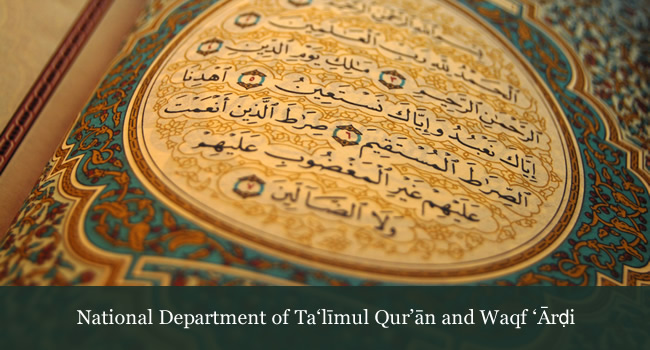
National Department of Ta‘līmul Qur’ān and Waqf ‘Ārḍi – Sign Up Sheet
INTRODUCTION
The Waqf ‘Ārḍi Scheme was initiated by Hazrat Khalīfatul-Masīh III (rh) in 1966. Its objective was to prepare every Ahmadī member as a Murabbī [Missionary] and to facilitate religious training of all Ahmadīs. Under this scheme, groups of Wāqifin are sent to outside Jamā‘ats for specified periods of time at their own expenses.
OBJECTIVES
The greatest purpose of this scheme is that Ahmadī members can offer their services on a temporary basis to organize special classes in various Jamā‘ats for learning and teaching of the Holy Qur’ān. Another purpose of the Waqf ‘Ārḍi Scheme is that the wāqifin can urge Ahmadī members to settle petty differences and advance in the direction of higher goals of this great scheme.
BENEFITS OF THE SCHEME
The Waqf ‘Ārḍi Scheme would not only play a great role in spiritual training of others, but it would equally benefit the wāqifin themselves. Before embarking on this mission, the wāqifin would be encouraged to overcome their shortcomings by focusing on prayers and gaining more religious knowledge through studies. This way, they would become excellent role models for others.
WAQF ‘ĀRḌI – GREAT SACRIFICE
All Missionaries and Office Bearers should urge every Ahmadī (man or woman) to participate in this great scheme, which undoubtedly demands great sacrifice. However, one should never forget that without sacrifices, one cannot win the pleasure of Allah.
STRUCTURE OF WAQF ‘ĀRḌI
The following conditions apply to Waqf ‘Ārḍi Scheme:
- All professionals, including professors and mature post-secondary students, are advised to participate in this scheme during their vacation time.
- A group of at least two Wāqifin is sent to outside Jamā‘ats at their own expense to carry out whatever tasks are assigned to them.
- Ahmadī women can also be sent to outside Jamā‘ats in groups of two, provided each woman is accompanied by her husband, father, or brother. If this is not feasible, then women can perform duties of Waqf ‘Ārḍi in their own cities for the spiritual training of Ahmadī women.
- The duration of Waqf ‘Ārḍi may vary from two to six weeks in a year, unless otherwise permitted.
Click here to fill out the Waqf ‘Ārḍi application form
Click here to view the guidelines for Virtual Waqf ‘Ārḍi
Learning Holy Qur`an
|
The Holy Qur`an is a compilation of the verbal revelations given to the Holy Prophet Muhammad sa over a period of twenty two years. The Holy Qur`an is the Holy Book or the Scriptures of the Muslims. It lays down for them the law and commandments, codes for their social and moral behaviour, and contains a comprehensive religious philosophy. The language of the Qur`an is Arabic… |
||||||||||||||||||||||||||||||||||
 |
|
|||||||||||||||||||||||||||||||||
|
What Does The Holy Quran Contain To the Muslims, the Quran is the Word of God and contains complete guidance for mankind. Much of the Quran is about God, His attributes and man’s relationship to Him. But it also contains directives for its followers, historical accounts of certain prophets and peoples, arguments for accepting Muhammad as a genuine Prophet and good news for the believers and warnings for the disbelievers. Broadly speaking, the contents of the Holy Quran fall into five main categories:
|
||||||||||||||||||||||||||||||||||
 |
|
|||||||||||||||||||||||||||||||||
|
|
||||||||||||||||||||||||||||||||||

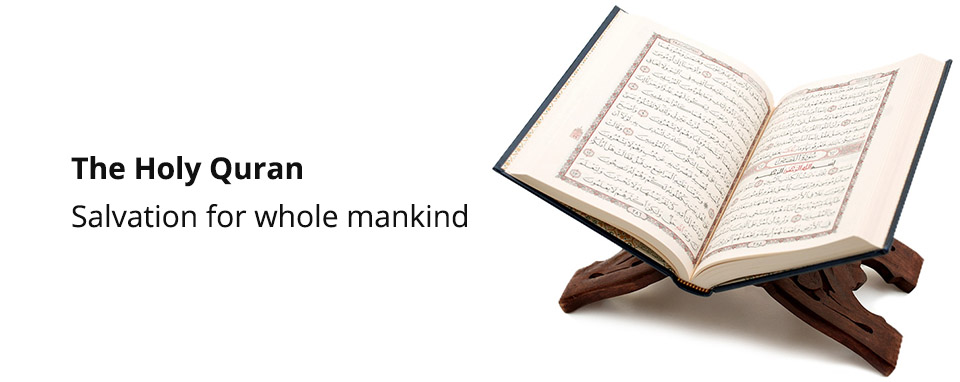
Ta`limul Qur`an Resources
What Does The Holy Quran Contain
To the Muslims, the Quran is the Word of God and contains complete guidance for mankind. Much of the Quran is about God, His attributes and man’s relationship to Him. But it also contains directives for its followers, historical accounts of certain prophets and peoples, arguments for accepting Muhammad as a genuine Prophet and good news for the believers and warnings for the disbelievers. Broadly speaking, the contents of the Holy Quran fall into five main categories:
- Nature of the Spiritual World
- The Law and Commandments
- Historical Accounts
- The Wisdom
- The Prophecies
Recitation of the Holy Qur`an:
- Qa`ida Yassarnal Qur`an [English] [Urdu]
- Learning Correct Recitation of the Holy Qur`an [click here] [Tartilul Quran Videos]
- Qur`an Grammer, [Lesson 1] [Lesson 2]
- Holy Qur`an Surahs – mp3 format, [click here]
- Holy Qur`an – Split Word Translation
[English] [Urdu]
Ta`limul Qur`an Resources:
Qur`an Presentations:
- Quran Introduction [618 KB]
- Tarteelul Quran [14.8 MB]
- Basic Arabic Grammer with Quranic Examples [100 KB]
- Blessings of Prayer [389 KB]
Other Presentations:
- Fath-e-Islam [723 KB]
- Philosophy of the Teachings of Islam [2.6 MB]
- Haqeeqatul Wahee [4.7 MB]
- Masih Hindustan Mein [3.7 MB]
- Al-Wasiyyat [401 KB]
Basics of Religious Education – Fifth Edition
One-stop resource handbook for learning the fundamentals of Islam and a host of other matters pertaining to the practce of faith, drawn from from the most authentic sources. Used as training manual and reference book.
- Download PDF [43.5 MB]
- Order Online
Waqf `Ardhi Scheme
- Objective and General Guidelines / Application Form [457 KB]
- Activity Report Form [215 KB]
Friday Sermon
Prayer Timings
| Fajr | |
| Sunrise | |
| Zuhr | |
| ´Asr | |
| Sunset | |
| Maghrib | |
| ´Ishaa´ |